

AMD Radeon RX 5600 XT review: Punching above its class - kellerpaithe
At a Glance
Expert's Rating
Pros
- Excellent 1080p gaming performance
- Fast GDDR6 VRAM, PCIe 4.0 support
- Faster BIOS unlocks much better performance
- Sapphire Pulse has great features for the price
- Trixx Boost software program uses smart downscaling for Federal Protective Service gains
- Very quiet
Cons
- Have to manually install critical performance-boosting BIOS
- No more tangible-time ray tracing capabilities
Our Verdict
The AMD Radeon RX 5600 Crosstalk delivers outstanding 1080p gaming, knock out the GeForce GTX 1660 Ti thanks to a last-minute BIOS promote. The need to install that upgrade manually and price cuts from competition Nvidia cards takes off some of its radiance, though.
Best Prices Today

$822.29
With the launch of the $279 Radeon RX 5600 Crosstalk, AMD's finishing off the mainstream push for its with-it "Navi" architecture by aiming for PC gaming's sweet descry, the no-compromises 1080p arena currently dominated aside Nvidia's trey of GeForce GTX 1660 graphics cards. It more gets the job done—especially if you get the right overclocked model, equipped with a supercharged BIOS.
Yes, the Radeon RX 5600 XT stool be much quicker than AMD originally claimed, but you penury to jump through or s basketball to achieve those speeds if you'atomic number 75 an early buyer, adding a unfortunate layer of confusion.
In the default configuration announced at CES 2020, the card does a solid job of matching upward with Nvidia's identically priced $279 GeForce GTX 1660 Ti. It's in force! But mere days in front the card's set up, AMD sent us a new BIOS for the usance $289 Sapphire Pulse Radeon RX 5600 XT on our quiz bench. This BIOS pushed the power limits to unaccustomed levels, which allowed Sapphire to crank up the overclock on the GPU and the already ablaze-fast GDDR6 memory.
Discourse an climb! With those unlocked capabilities, the Sapphire Pulse Radeon RX 5600 XT shifted from a solid GTX 1660 Titanium alternative to a full-along rival for the $350 GeForce RTX 2060—and AMD's own $350 Radeon RX 5700. AMD says select other models will receive the turbocharged BIOS A well.
"Jebaited," cumuliform two, or a reaction to some GeForce RTX 2060 models dropping to $300 in the years forward of the Radeon RX 5600 XT's launch? Giddy-up either path.
AMD Radeon RX 5600 XT: Specs, features, price
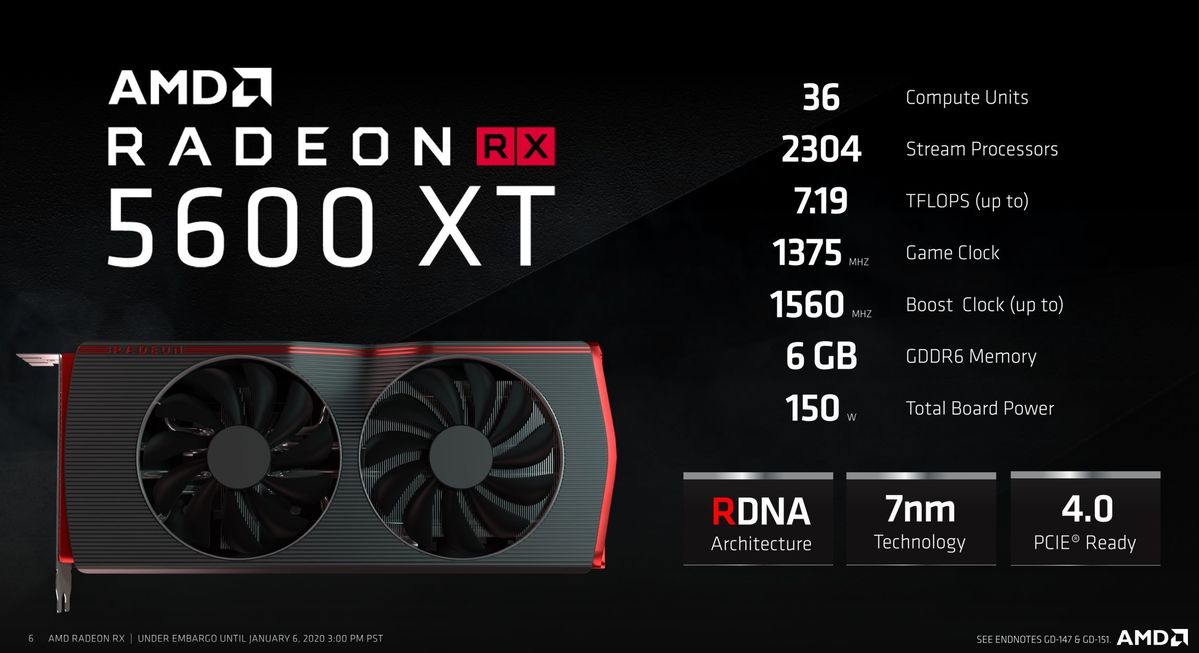
Permit's kick things off by looking the Radeon RX 5600 XT's declared configuration, which cadaver AMD's advisable reference work design specs.
 AMD
AMD Here's how we described the design in our original coverage:
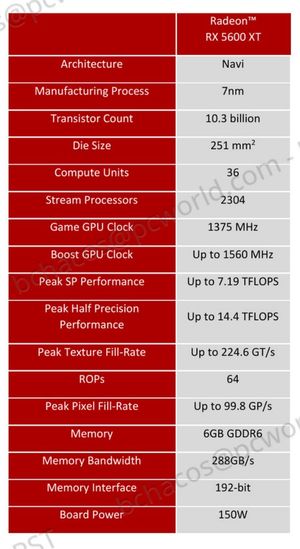
"The Radeon RX 5600 XT is essentially a toss off-clocked interlingual rendition of the $350 Radeon RX 5700 with a reduced memory conformation. Its 36 work out units pack the same 2,304 stream processor count, but clocked so much lower, at 1375 game and 1560 boost Erodium cicutarium. Aside comparing, the credit Radeon RX 5700 hit 1,625MHz game clocks (the typical clock speeds you can expect to see while gaming).
And while the pricier RX 5700-series kept their GPUs fed with 8GB of GDDR6 RAM over a 256-bit memory bus, the new Radeon RX 5600 XT sticks to 6GB of 12Mbps GDDR6 memory over a 192-second bus. Don't flout, though: Moving to faster GDDR6 memory gives the Radeon RX 5600 XT an overall memory board bandwidth of 288GBps, patc the older Radeon RX 590's GDDR5 RAM but stumble 256GBps overall bandwidth despite using a wider 256-bit bus and a larger 8GB capacity."
The Radeon RX 5600 XT will also support the modern features commons to all "Navi" GPUs, such as PCIe 4.0 support, immensely increased power efficiency, and the latest display and media engines. AMD's new card also supports all the fancy features enabled aside Radeon Software Adrenalin 2020 Variant, so much as Radeon Boost, Radeon Image Sharpening, and Radeon Opposed-Lag. They're complete good stuff.
 AMD
AMD Character reference spectacles for the RX 5600 XT.
There will be no reference variant of the RX 5600 XT. Or else, all the cards on store shelves from January 21 onward will be custom designs by AMD's plug-in partners. Expect most to hold fast a single 8-pin supplementary power connecter.
Out of the box, the Sapphire Pulse supplied for review stuck to AMD's 150-watt maximum tycoo allotment, which allowed the company to push the game clock busy 1,560MHz—already a nearly 200MHz boost over the reference spec. That allowed it to match prepared well against a heavily overclocked Asus ROG Strix reading of the GeForce GTX 1660 Ti, every bit you'll get a line in our benchmarks.
Then AMD sent us the new BIOS.
Radeon RX 5600 XT unlocked and unleashed
While the Radeon RX 5600 XT features a different memory configuration, retrieve that it's rocking the same core GPU configuration as its bigger sibling, the Radeon RX 5700, but with lowered power and clock limits. The new BIOS closes the gap.
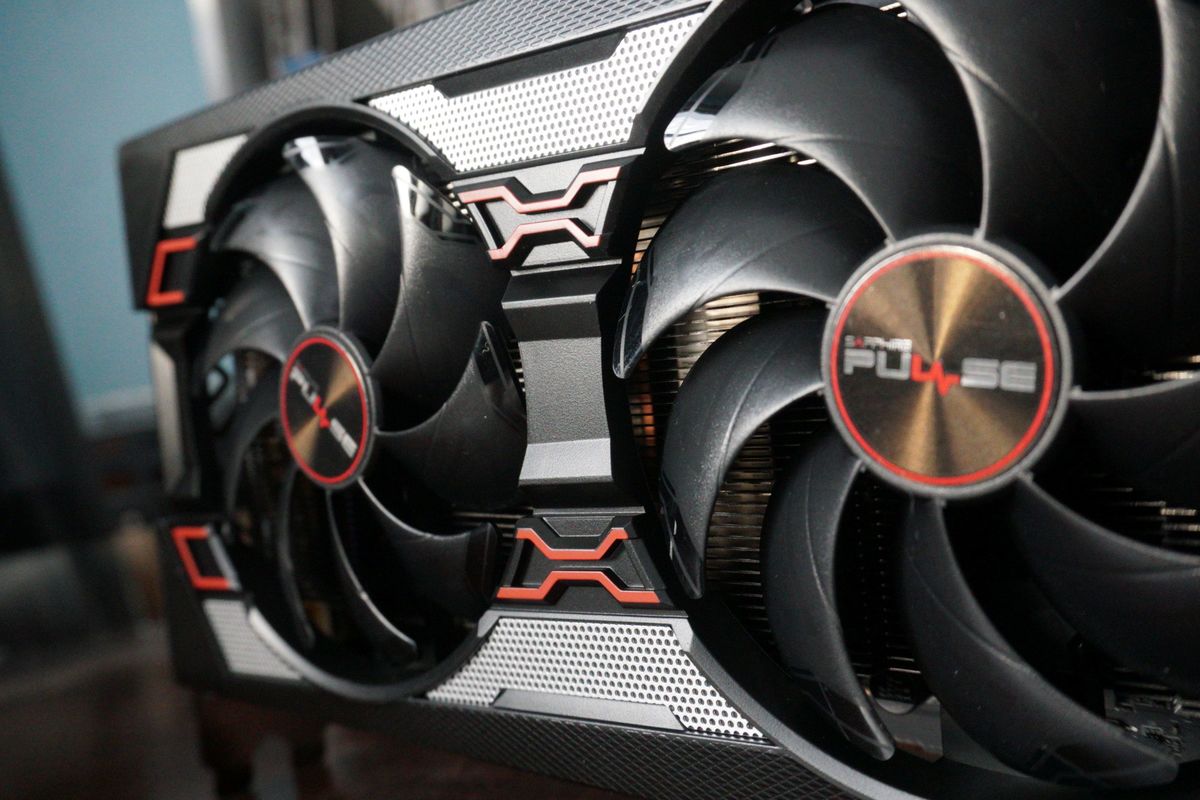
The faster BIOS for the Sapphire Pulse Radeon RX 5600 XT ups the total board might from 150W to 160W. That countenance Sapphire crank the card's Gamey Clock to 1,615MHz and hike GDDR6 memory speeds from 12Mbps to 14Mbps. It's a substantial upgrade, and one that's shocking to see enabled, as with IT, the $289 Sapphire Pulse RX 5600 XT comes damned fold to the $350 Radeon RX 5700's execution in several games.
 Brad Chacos/IDG
 Forthwith for the corky news. This seems to be a last-atomlike addition. It came late in the testing bike, and if you buy one of the first wave of cards along store shelves, it might come equipped with the slower BIOS. Sapphire tells me that most cards in North America will ship with the new BIOS installed, but in case yours doesn't, you'll be able to tear the recently BIOS for footloose immediately: "Sapphire bequeath be providing the early VBIOS, detailed instructions, and the service program to its website for users to make the shift themselves occur January 21," an AMD representative told PCWorld. "Moving forward, all spic-and-span production units will feature the original VBIOS."
If you buy the Sapphire Pulse Radeon RX 5600 XT on day one, turn back its stats in GPU-Z Beaver State another hardware-checking tool. The slower original BIOS will indicate a 1355 GPU clock and 1,620MHz boost clock, patc the upgraded BIOS shows a 1420 GPU clock and 1,750MHz boost time. If you have the slower reading, glucinium sure to travel to Sapphire's product page for the card to pick upbound the faster firmware. Sapphire's certification should walk you through the process.UPDATE:This Sapphire video shows how to update your VBIOS, bit by bit.
It's frustrating having to upgrade your BIOS out of the box for best performance, and you have toknow that you should go looking for the BIOS to get it, merely the upgraded firmware makes a massive difference.
It sounds like the Pulse won't be the only if card receiving the upgrade, either. When we asked whether this BIOS would be unique to Sapphire, we were told the following:
"Supported on on-going testing with AMD board partners, we have raised the GPU core and memory frequencies for overclocked Radeon RX 5600 Crosstalk SKUs to take advantage of increased hot and electrical headroom built into partner's custom designs. The updated VBIOS has been made available to our board partners for inclusion body in select OC SKUs at launch. AMD is dedicated to disrupting the market with industry-leading figure products, and the new VBIOS makes the Radeon RX 5600 XT an tied to a greater extent compelling contender for full-operation 1080p gaming. Antecedently announced product specs are unchanged, atomic number 3 they remain AMD's advisable reference design specs."
Meet the Sapphire Heart rate Radeon RX 5600 XT
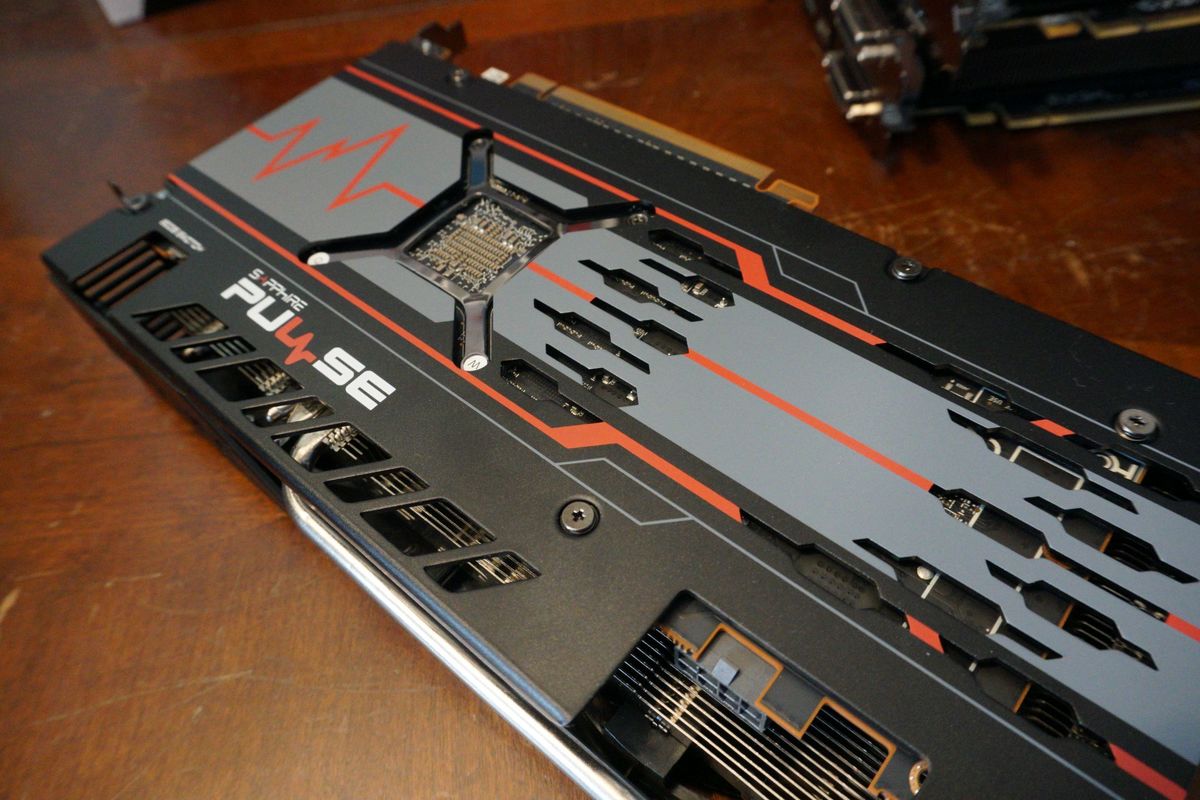
Sapphire may embody all but noted for its slayer enthusiast-class Nitro+ nontextual matter card game, but the company's value-oriented Pulse line has carved proscribed a nice niche for itself, too. As we've already seen in the Radeon RX 5500 XT and 5700 variants, Pulse-series artwork card game provide some receive extra features for a mere $10 upcharge.
 Brad Chacos/IDG
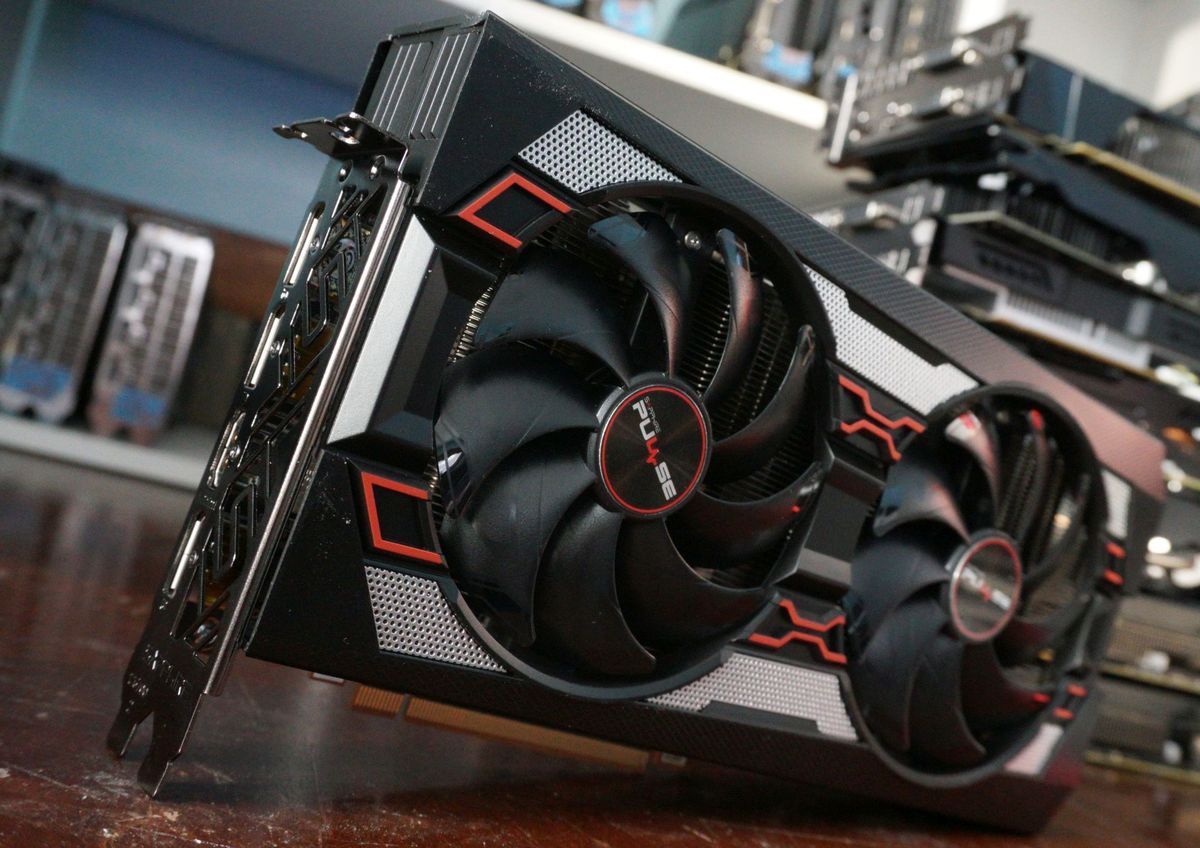
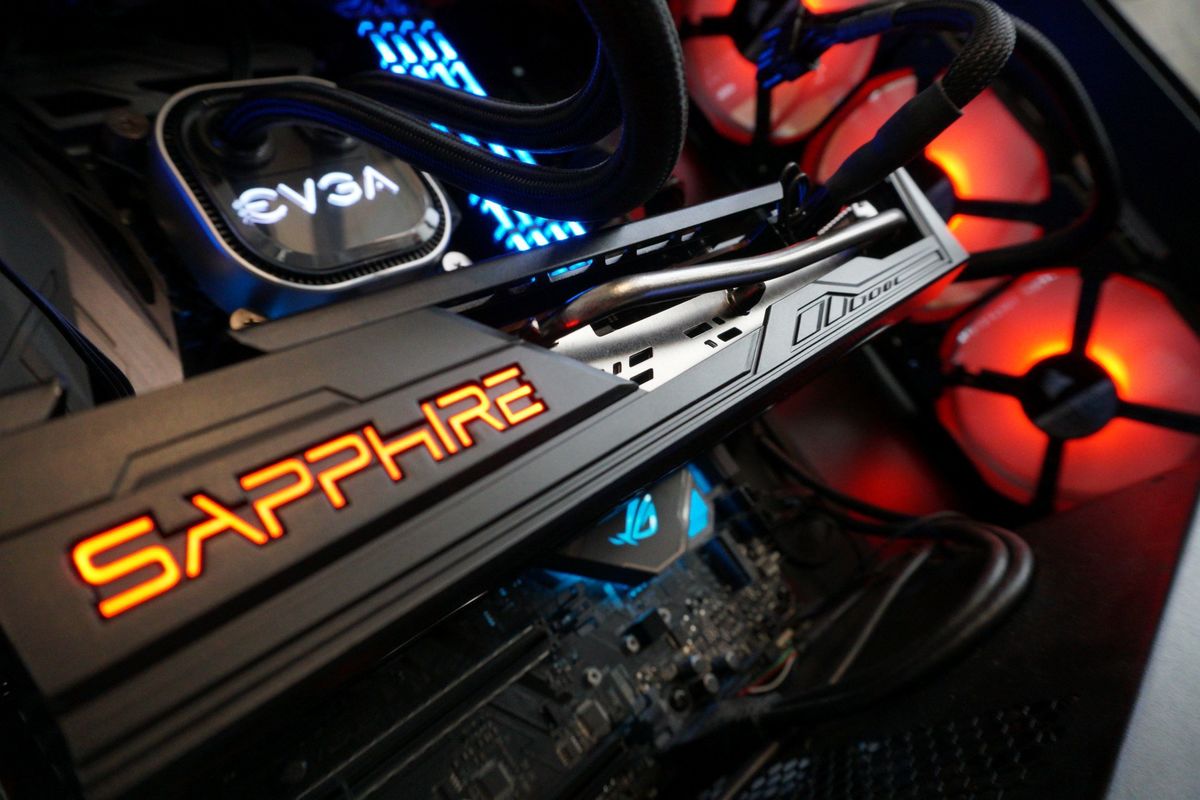
 The $289 Sapphire Pulse Radeon RX 5600 XT is no exception. Like its cousins, the card offers a cool, quiet threefold-axial ice chest design, accented by an illuminated Sapphire logo and a attractive metal backplate. Backplates are rarefied in graphics cards that stick close to MSRP pricing.
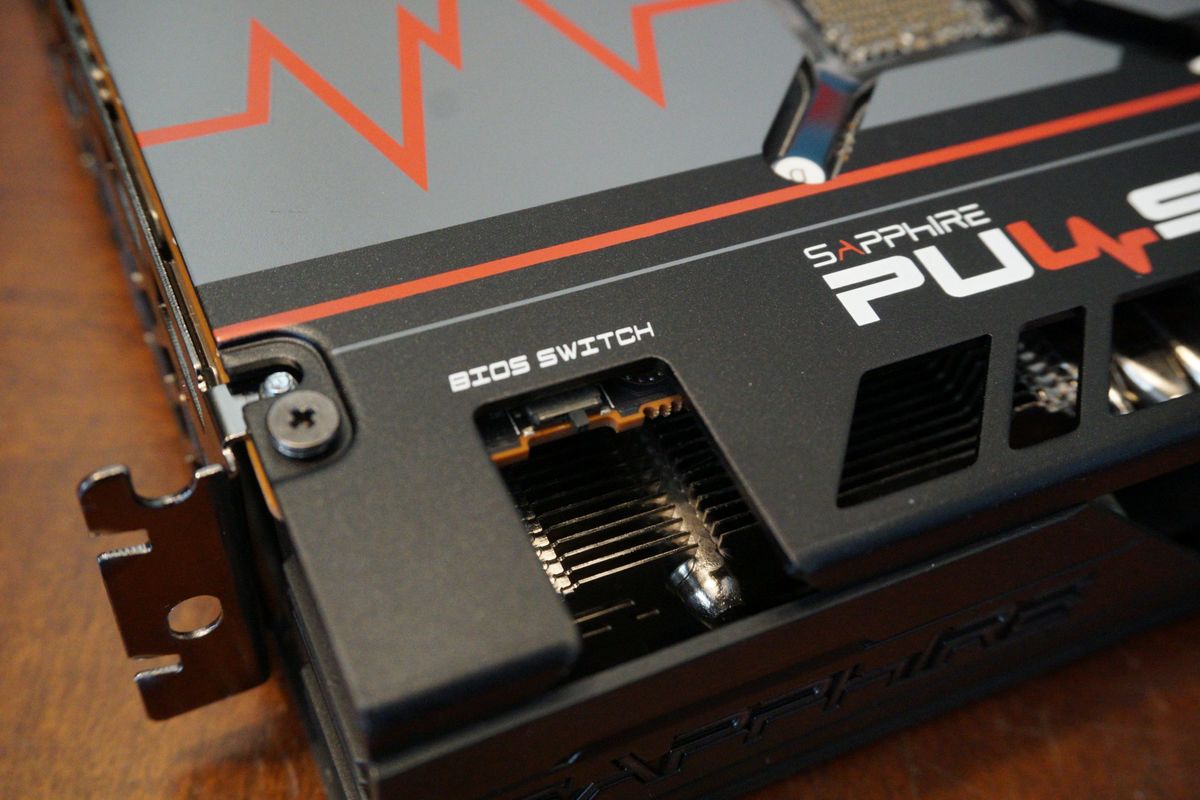
Flatbottom more rare? A threefold-BIOS switch—but the Sapphire Pulse has single of those, excessively. The default "Performance" BIOS uses the configuration described above, but a secondary "Silent" BIOS focuses on improved acoustics and temperatures by sacrificing some functioning. Information technology runs at 135W, with slower GPU and memory speeds. Expect public presentation closer to reference levels with IT enabled.
The card also includes an faineant fan plosive consonant sport, so it's understood when you'rhenium not actively play.
Sapphire fitted out the Pulse with a single 8-pin power connector, a trio of DisplayPorts, and a individualistic HDMI connection. You'll need an adapter (or better yet, a newly admonisher) if you involve a DVI or VGA connection. Like all modern Radeon GPUs, the Sapphire Pulse Radeon RX 5600 Crosstalk works mechanically with FreeSync-compatible displays to enable buttery-smooth, trigger-happy-free gaming with no hassle.
 Brad Chacos/IDG
 The greatest trick up Sapphire's sleeve in the Navi era is its outstanding Trixx Encouragement characteristic, activated via the company's nonmandatory Trixx package. Trixx Boost pairs a slightly downscaled resolution tweak with AMD's superb Radeon Image Sharpening technology to accomplish faster performance with footling too no sense modality downgrade, contingent how aggressively you opt to downscale the image. We didn't have time to essa the Sky-blue Pulse Radeon RX 5500 XT with Trixx Boost enabled—testing both the master copy and new BIOS took a lot of time—but we highly recommend giving it a swirl. Sapphire's engineering won "Top excogitation" in our Full Nerd Podcast's 2019 awards for a reason.
Suss out our Sapphire Pulse Radeon RX 5700 review for a full walkthrough of the feature, and our Pulse RX 500 XT follow-up to see our experiences using Trixx Boost at 1080p, the resolution that the Radeon RX 5600 XT was intentional for.
Succeeding page: Our test system, performance benchmarks set out
Our test system of rules
Our consecrated nontextual matter wit tryout system is packed with whatsoever of the fastest complementary components available to put whatever potential execution bottlenecks squarely happening the GPU. Most of the hardware was provided by the manufacturers, but we purchased the cooler and repositing ourselves.
- Intel Core i7-8700K processor ($350 on Amazon River)
- EVGA CLC 240 squinting-loop-the-loop liquid cooler ($120 along Amazon)
- Asus Maximus X Hero motherboard ($395 on Amazon)
- 64GB HyperX Predator RGB DDR4/2933 ($420 on Amazon)
- EVGA 1200W SuperNova P2 king supply ($230 happening Virago)
- Corsair Watch glass 570X RGB case, with front and height panels removed and an extra rear end fan installed for improved airflow ($130 on Amazon)
- 2x 500GB Samsung 860 EVO SSDs ($78 each on Amazon)
We'Re comparing the $290 Sapphire Pulse Radeon RX 5600 XT against its key Nvidia rivals: The $200 GeForce GTX 1660, $230 GTX 1660 Super, $280 GTX 1660 Ti, and $350 GeForce RTX 2060 Founders Edition (though Nvidia dropped the 2060 Founders Edition price to $300 just ahead of AMD's found). Same the Radeon RX 5600 XT, Nvidia's GTX 16-serial GPUs lack acknowledgment versions, so we'atomic number 75 using overclocked customs models for these tests. We're also comparing AMD's GPU against its Navi-supported siblings, the $180 Sapphire Heart rate Radeon RX 5500 Crosstalk and $350 Radeon RX 5700 consultation edition.
This review Simon Marks the intro of several new games to our testing suite, though some titles from last year's card remain. Each game is tested using its in-game benchmark at the highest possible graphics presets unless differently noted, with VSync, frame order caps, real-time ray tracing or CLSS effects, and FreeSync/G-Sync disabled, and we've enabled temporal anti-aliasing (TAA) to push these cards to their limits. We run each benchmark at least three times and list the average lead for each psychometric test.
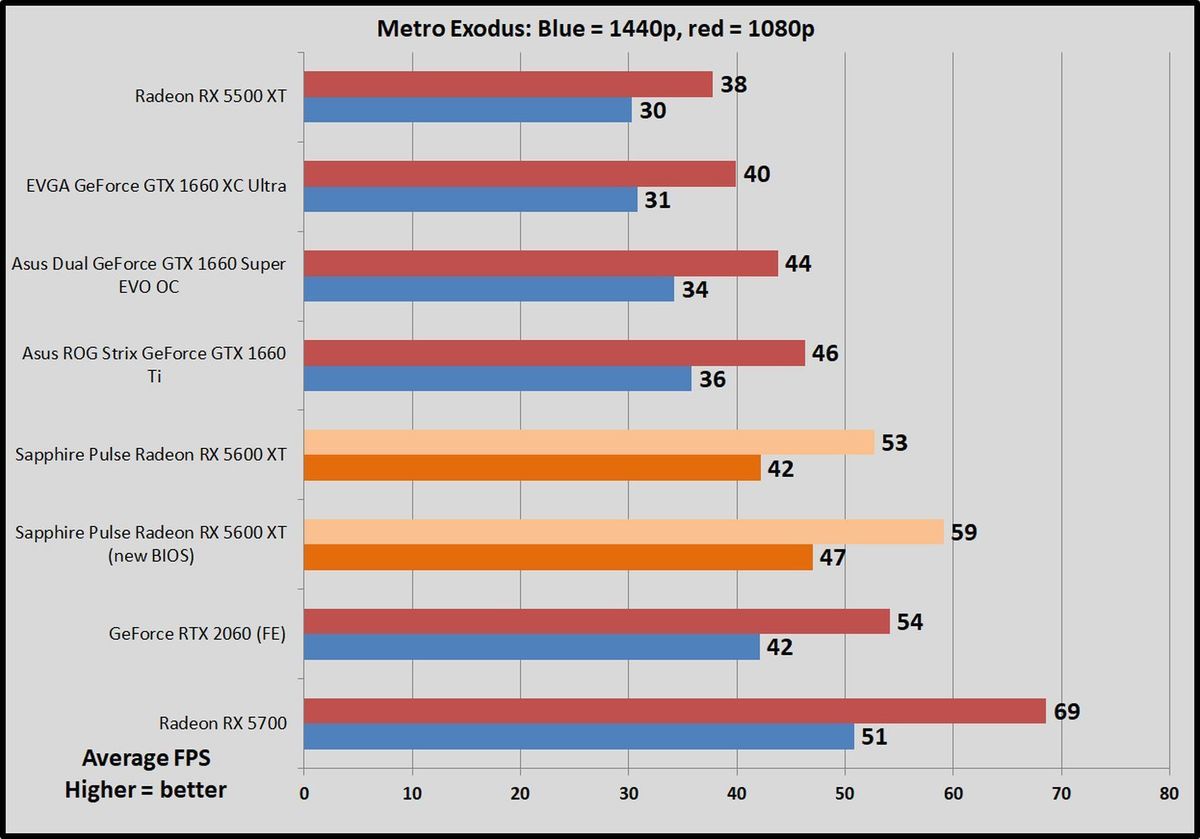
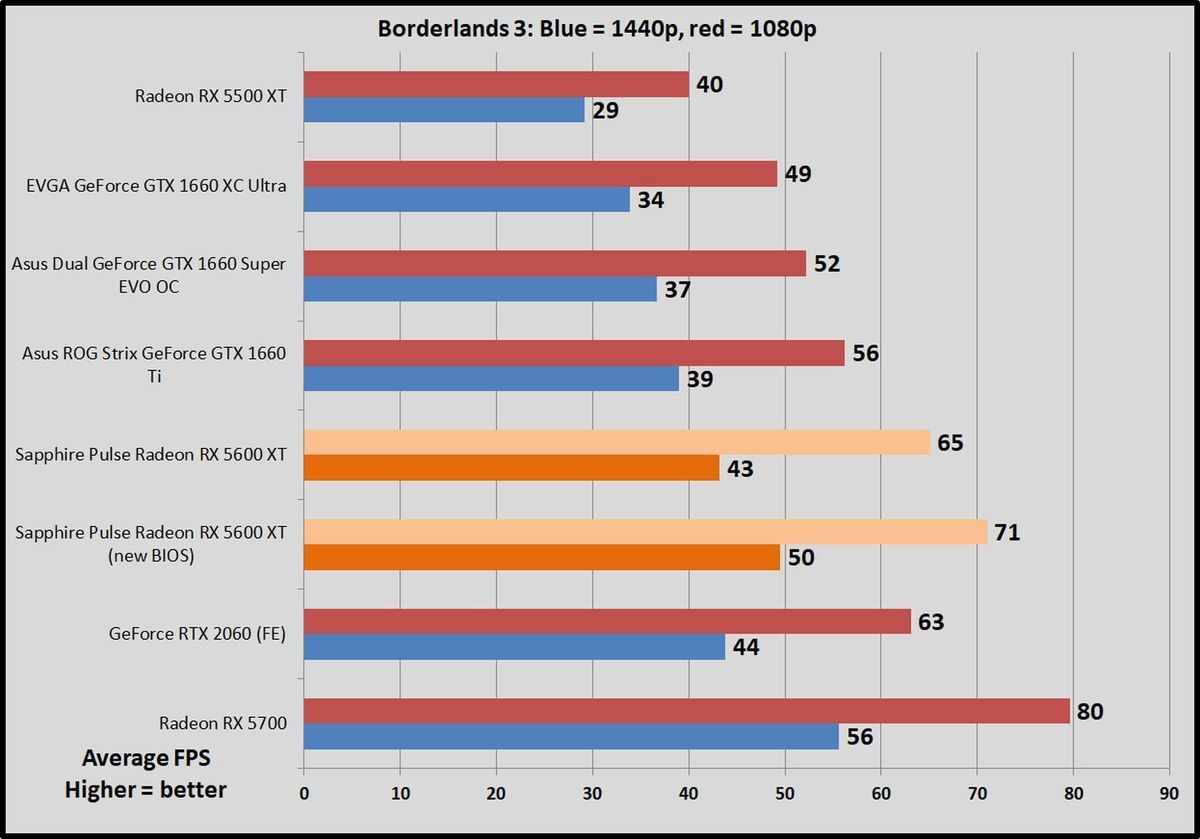
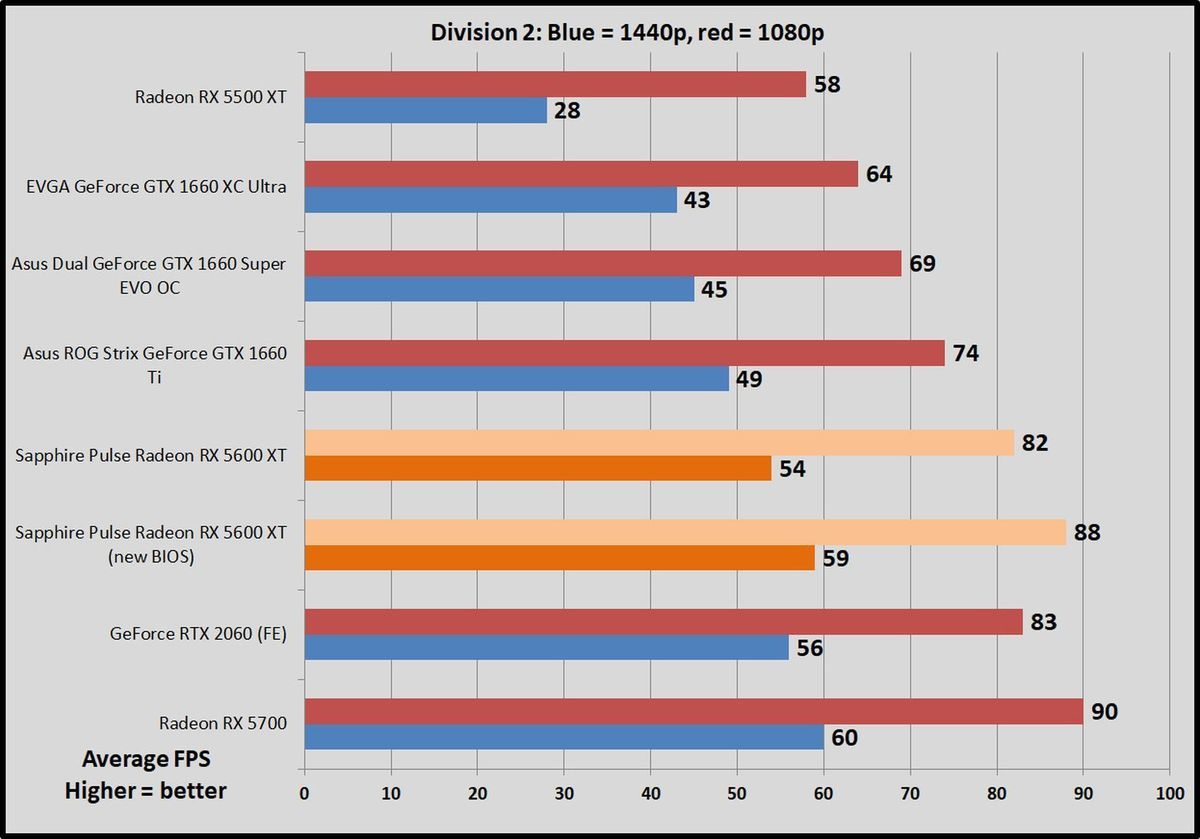
We tested the Sapphire Radeon RX 5600 XT victimization its default Performance BIOS, rather than its secondary Silent BIOS that increases efficiency and lowers fan speeds at the be of performance. We've included performance results for the lower-clocked Public presentation BIOS that will follow installed on extraordinary launch stock for the Sapphire Pulse, as well as (much better) results for the upgraded BIOS that will be available for users to download on day unrivaled, and come standard going forward.
AMD says the Radeon RX 5600 XT targets ultimate 1080p performance, but it's as wel good enough for some 1440p gaming, so we've included those results Eastern Samoa well.
Gaming performance benchmarks
Metro Exodus
One of the best games of 2019, Metro Exodus is same of the best-looking games around, too. The latest version of the 4A Engine provides unbelievably scrumptious, ultra-detailed visuals, with indefinite of the most stunning real-time ray tracing implementations released even. We essa in DirectX 12 mode, with ray trace and DLSS unfit.
 Brad Chacos/IDG
 Borderlands 3
Borderlands is back! Gearbox's game defaults to DX12, so we do besides, which gives us a coup d'oeil at the ultra-popular Unreal Engine 4's public presentation—though this bet on's carrying out leans heavily in AMD's favor.
 Brad Chacos/IDG
 Division 2
The Variance 2 is 1 of the top-grade looter-shooters ever created. The luscious visuals generated by Ubisoft's Anemone quinquefolia railway locomotive get in even easier to get misplaced in post-apocalyptic Washington D.C. The shapely-in bench mark cycles through four "zones" to try an array of environments, and we test with the DirectX 12 renderer enabled.
 Brad Chacos/IDG
 Next page: Gaming benchmarks continue
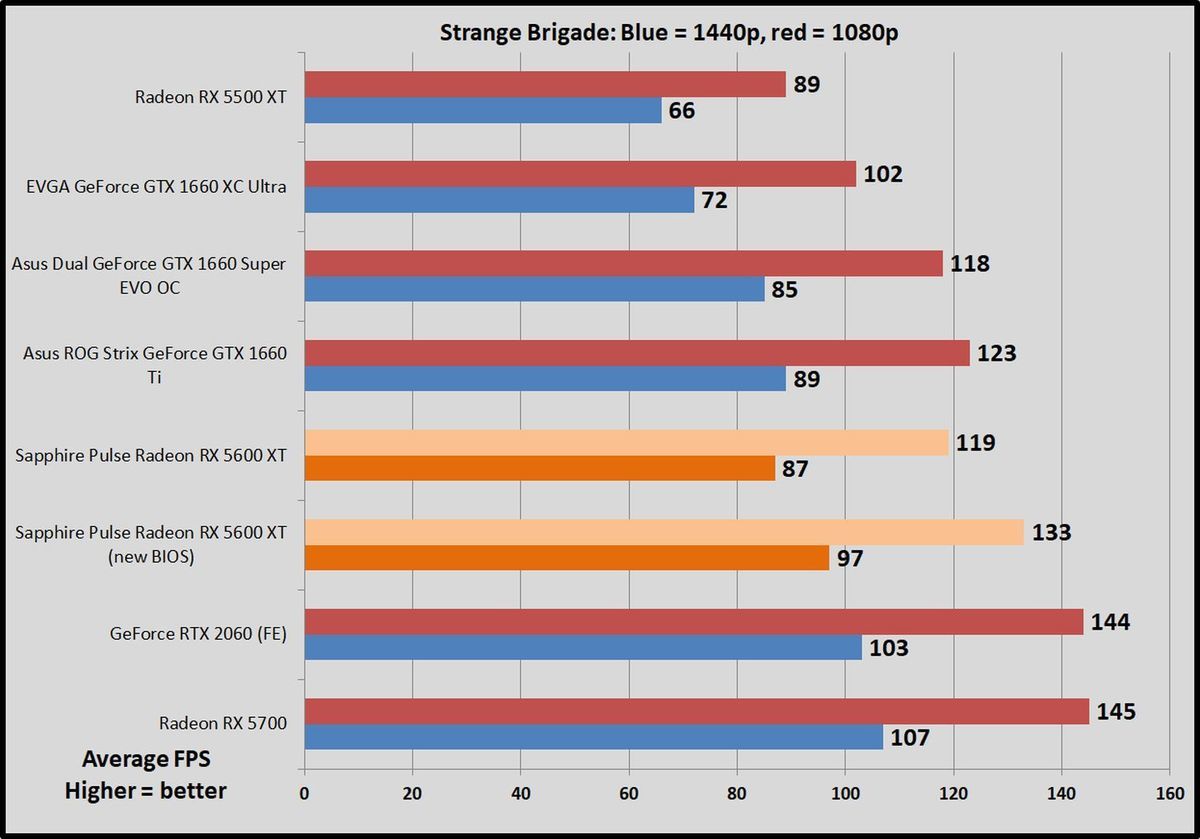
Strange Brigade
Strange Brigade is a cooperative third-person shooter where a team up of adventurers blasts through hordes of mythical enemies. It's a technological showcase, built or so the next-gen Vulkan and DirectX 12 technologies and infused with features similar HDR support and the power to toggle asynchronous compute on and off. It uses Rebellion's custom Azure engine.
Last class we used the DX12 renderer, arsenic it offered developed performance. In 2020, we've switched to the Vulkan renderer with async compute enabled, as it's now your fastest option, and Vulkan games are rare indeed.
 Brad Chacos/IDG
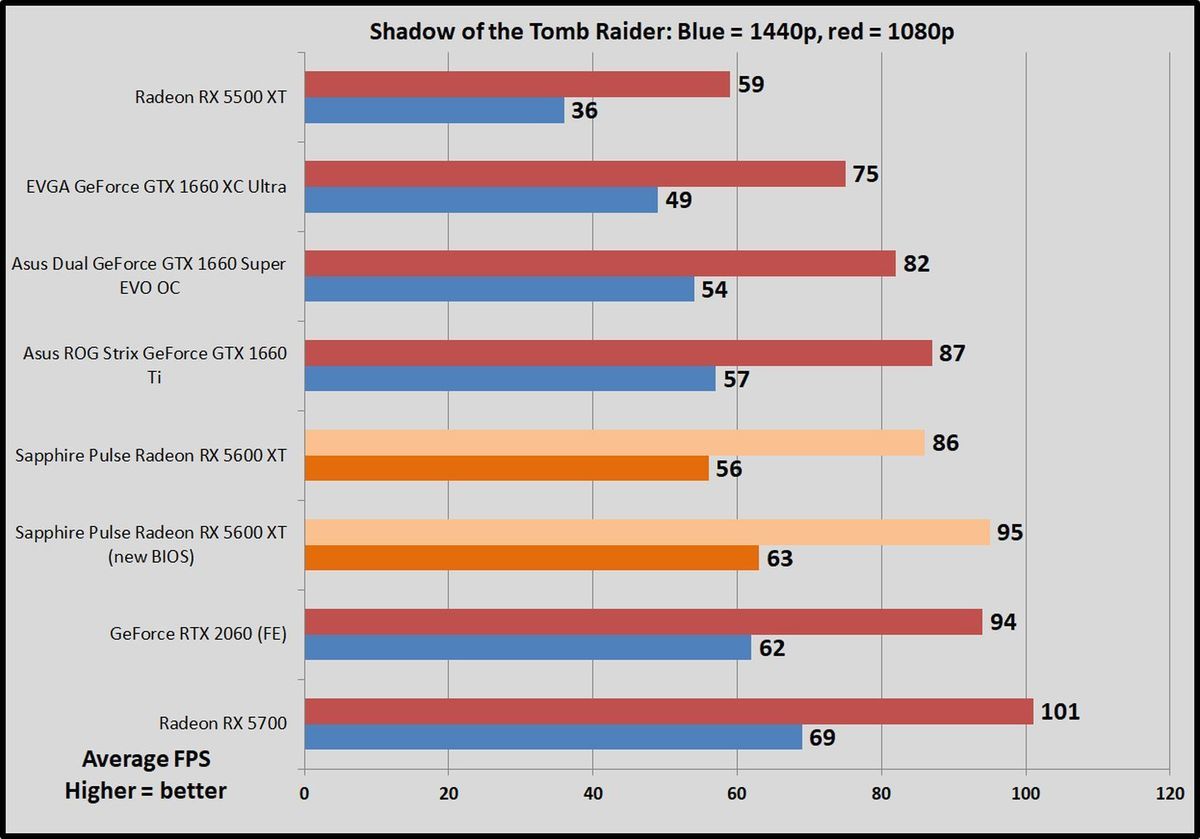
 Shadow of the Grave Raider
Shadow of the Tomb Raider concludes the reboot trilogy, and it's utterlygorgeous. Square Enix optimized this game for DX12, and recommends DX11 only if you'rhenium using older ironware or Windows 7, so we test with DX12.Trace of the Grave Raider uses an enhanced interlingual rendition of the Foundation engine that also poweredRise of the Tomb Raider and includes optional real-time irradiate trace features.
 Brad Chacos/IDG
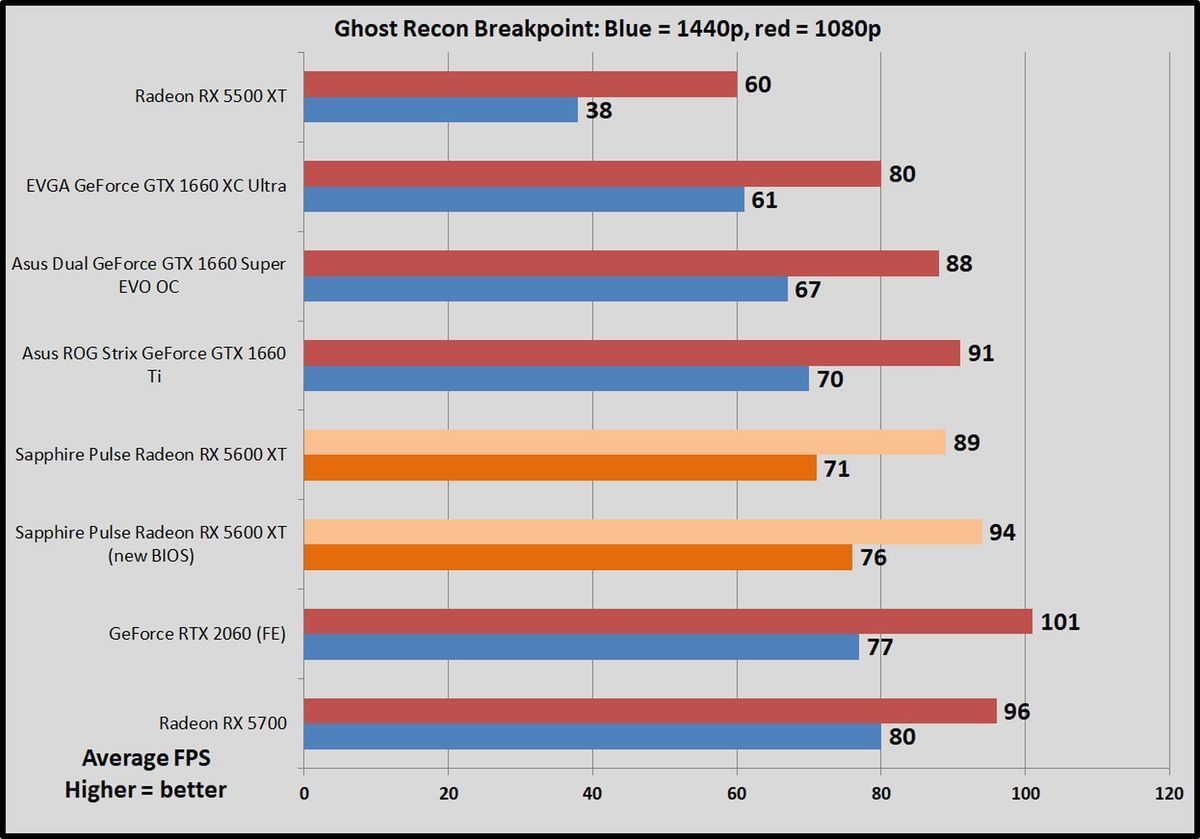
 Ghost Recon Breakpoint
It may run around in DX11, simply like its predecessor, Ghost Recon Breakpoint and its AnvilNext 2.0 engine utterlymelts GPUs—much so that we test this gage on Very High rather than Ultra settings.
 Brad Chacos/IDG
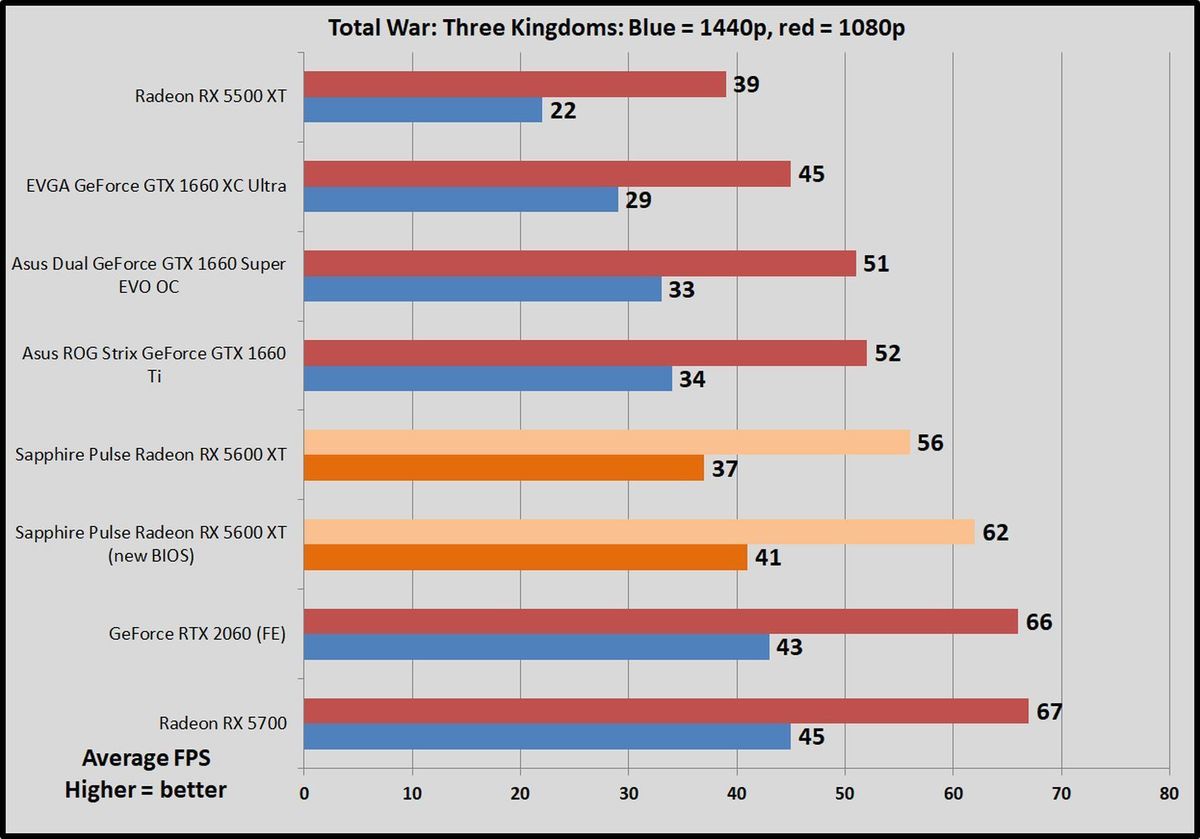
 Total War: Three Kingdoms
Most of the games in our cortege are shooters or adventure games, but we've included Total War: Three Kingdoms to give America a coup d'oeil at RTS performance. Information technology's another DX11 mettlesome, running on an improved version of the same engine saved in Creative Assemblage's past Total War entries.
 Brad Chacos/IDG
 GTA V
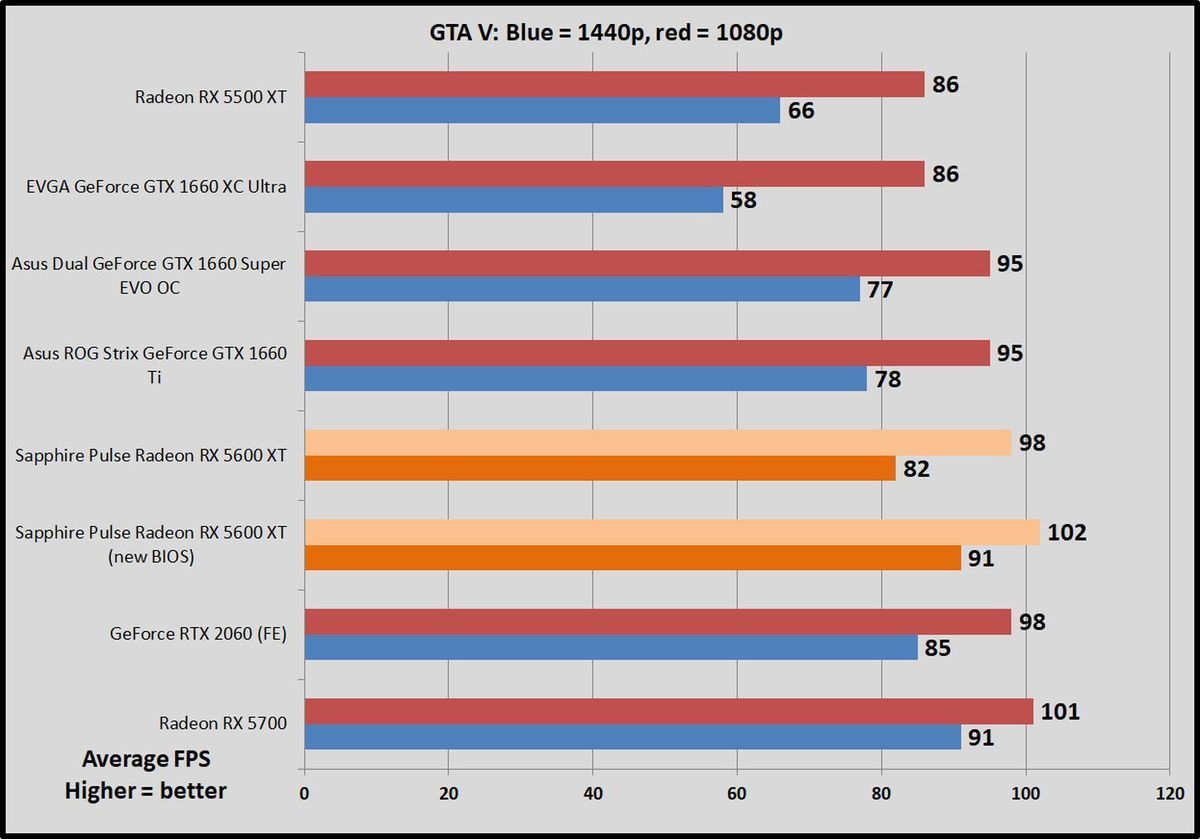
Grand Theft Auto V isn't really a visual barn-burner, but information technology still tops the Steam charts day in and day out. We test it with all options turned to Very High, all Advanced Graphics options except extended shadows enabled, and FXAA.GTA Vruns on the RAGE engine and has received substantial updates since its initial launch.
 Brad Chacos/IDG
 Next page: Gaming benchmarks, thermals, and exponent
F1 2019
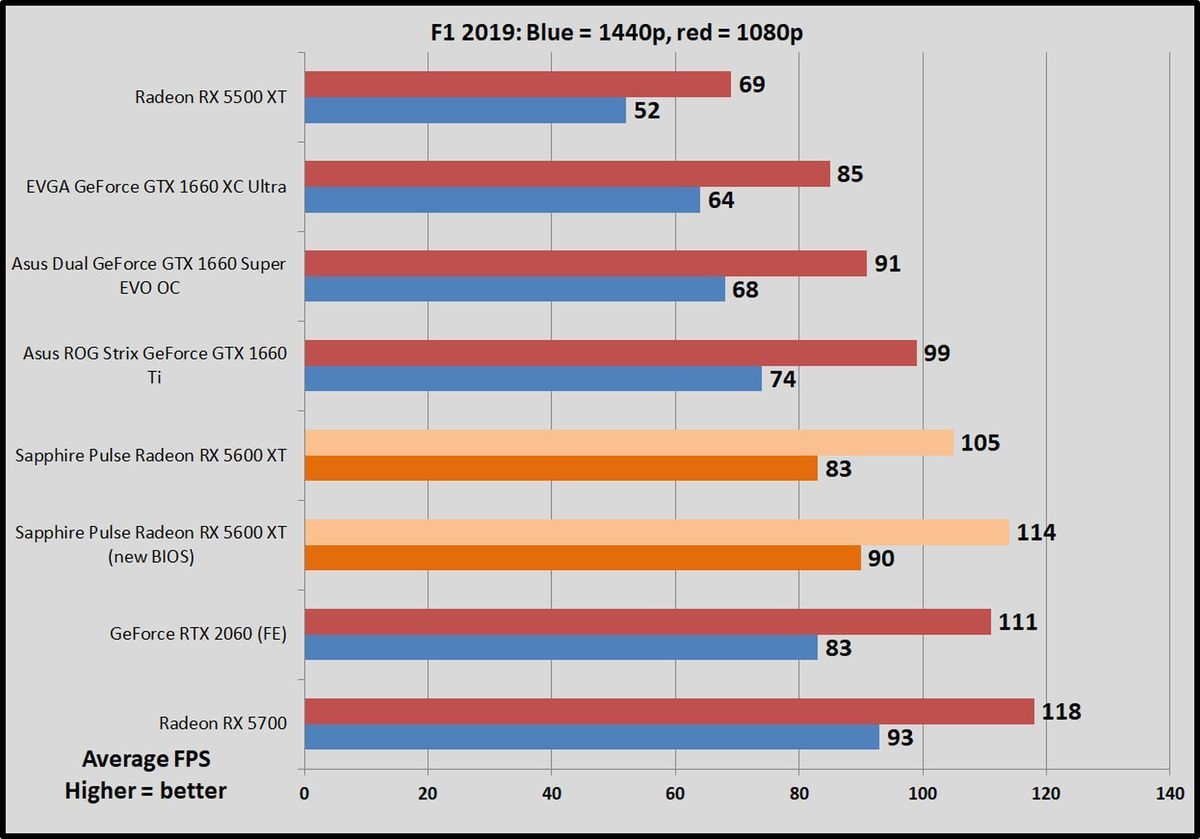
The latest in a long run along of successful racing games,F1 2019 is a gem to test, provision a wide array of both graphical and benchmarking options, making information technology a much more reliable (and fun) option that theForzaseries. It's built happening the latest version of Codemasters' fat-smooth Ego game engine, everlasting with support for DX12 for the first time. We test 2 laps along the Australia path, with clear skies.
 Brad Chacos/IDG
 World power draw, thermals, and noise
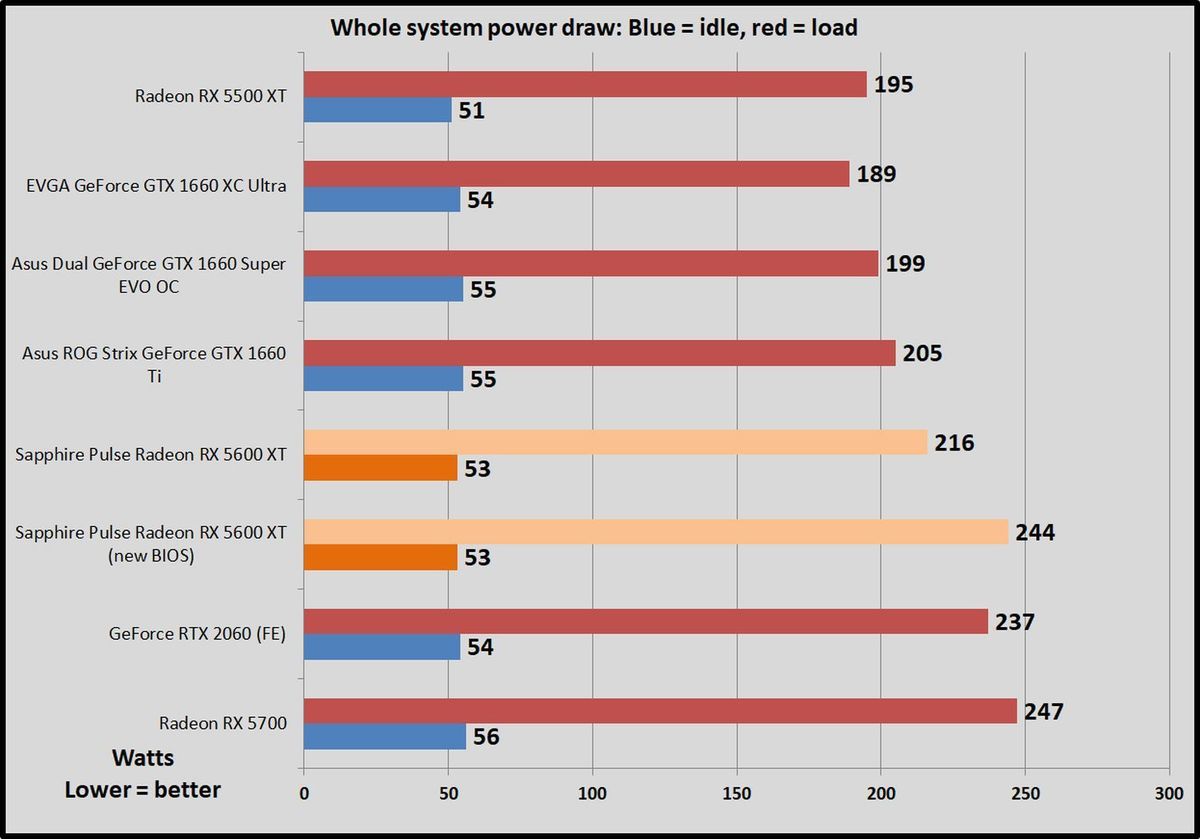
We exam power draw by looping theF1 2019 benchmark for well-nig 20 minutes after we've benchmarked everything else and noting the highest reading on our Watts Upwardly Pro meter. The initial part of the raceway, where all competing cars are onscreen simultaneously, tends to be the all but exigent lot.
 Brad Chacos/IDG
 AMD's move to 7nm, GDDR6, and the new RDNA architecture paid dispatch. Spell Radeon GPUs have been hot and power-hungry compared to their GeForce rivals for several years running, the Radeon RX 5600 XT's "Navi" GPU rivals Nvidia's vaunted tycoo efficiency. Note, however, that the upgraded BIOS's performance rise requires a power boost to hit the higher frame rates.
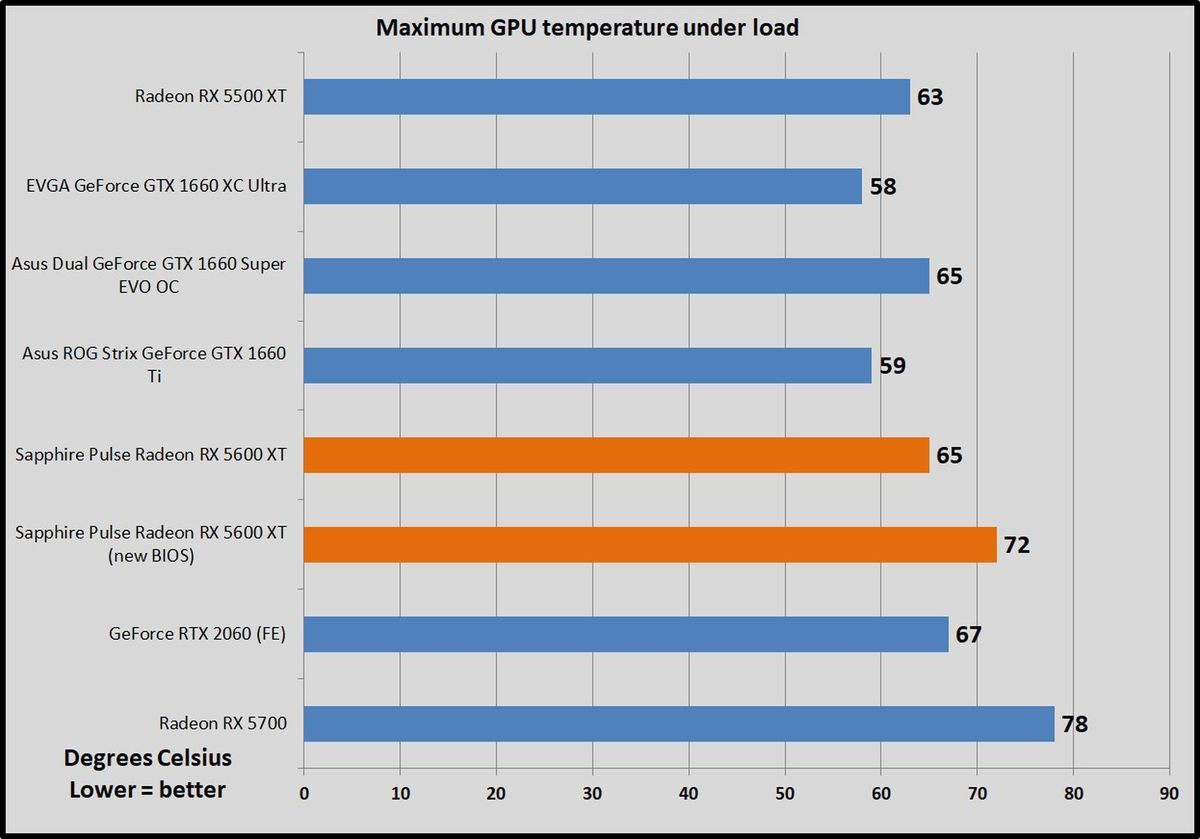
We test thermals by leaving GPU-Z wide-eyed during theF1 2019 power pull back test, noting the highest utmost temperature at the end.
 Brad Chacos/IDG
 Sapphire's Pulse might be affordable, but the cooler does its job even in Performance mode, topping out at 72 degrees Celsius subordinate load. That's higher than nearly of the results here, simply still selfsame chilly in the real humankind. IT's beautiful lost quiet, too. As with the power draw test, the lower-hopped-up BIOS achieves amend results—every bit you'd expect—but the tradeoff's worthwhile for the performance.
Next page: Should you buy the AMD Radeon RX 5600 XT?
Should you buy the Sky-blue Pulse Radeon RX 5600 XT?
The Sapphire Throb Radeon RX 5600 XT is a slap-up art card well meriting considering! Make a point you grab the upgraded BIOS if you're buying it connected day one, though Sapphire representatives told Pine Tree State that most North American stock should come with the new BIOS preinstalled.
In the original BIOS configuration, with lower clock speeds and mightiness usage, the $279 Radeon RX 5600 XT is mostly a trifle faster than an overclocked version of the similarly priced GeForce GTX 1660 Ti—a solid alternative, just no home run. The upgraded BIOS changes that. Now, Sapphire's Pulse is somewhat faster than the $350 GeForce RTX 2060 in many games, and in the Lapplander ballpark when information technology's not. But that besides closes the spread in AMD's own cartesian product lineup, as Sapphire's overclocked Heartbeat RX 5600 XT gets very close to the $350 Radeon RX 5700's performance. In several games, it effectively matches the pricier sibling, while remaining nerveless and quiet.
 Brad Chacos/IDG
 Cerulean charges a $10 price premium for the Pulse RX 5600 XT. Even at $289, it's a stunning assess for zero-compromises 1080p gambling at high refresh rates, offering some nice extra touches (like a backplate and a threefold-BIOS switch) and functioning that hangs with cards that cost $60 more. Using Sapphire's first-class Trixx Boost software can advertize its performance still promote. The Pulse comes extremely advisable, especially since we're not certain what former Radeon RX 5600 XT nontextual matter cards will undergo the emotional BIOS.
Yes, needing to ascent your radical graphics card's BIOS is nettlesome, and something we're seeing a bit too often in the Navi era. It needs to stop. Unremarkable gamers don't find comfortable tinkering with their BIOS, and it shouldn't be required for the Best day-one performance. Worse, you'll have to cognize that you want to run along looking for that BIOS to begin with—AMD's Radeon software doesn't assure you about it. That aforementioned, the issue will disappear erst additional stock hits storage shelves with the later BIOS preinstalled, and it's very worthwhile to perform the chore in the meantime. The upgraded BIOS efficaciously renders the GTX 1660 Ti obsolete and bumps the Radeon RX 5600 XT up a functioning grade.
Again, here's a Cerulean video close you done the VBIOS upgrade work on for this card:
Nvidia isn't purblind to the threat, though. Ahead of the Radeon RX 5600 XT's establish, it dropped the price of its own GeForce RTX 2060 Founders Edition from $350 to $300, and a handful of custom cards duplicate the price with sales. At CES 2020, EVGA announced the GeForce RTX 2060 KO, a custom variation with a $300 starting price. (We'll be reviewing it soon.)
The GeForce RTX 2060 doesn't handle period of time ray tracing every last that well, but AMD's current Radeon GPUs can't shaft of light trace whatsoever, so if you're involved in the newfangled lighting technology, the prospect of $300 RTX 2060s severely muddles the Radeon RX 5600 XT's esteem proposition. Nvidia and AMD both pull pricing tricks around rival launches day in and day out, though, so it remains to Be seen whether the $300 toll point for the GeForce RTX 2060 sticks, as it wasn't an authoritative toll cut. Nvidia's price drop on its Founders Variant puts heavy pressure on other manufacturers to match, still, especially with the EVGA KO hitting the same cost.
You likewise don't need to muck with BIOS updates stunned of the box with the GeForce nontextual matter cards.
Take your pick betwixt the Radeon RX 5600 XT and GeForce RTX 2060, assuming Nvidia's card stays at $300. If RTX 2060 costs drift back toward $350, the Radeon RX 5600 XT with its powered BIOS is a much better value.
 Brad Chacos/IDG
 These aren't the only options, though. If you have a 60Hz 1080p monitor or don't mind dialing graphics settings down from the supreme, the $230 GeForce GTX 1660 Super is deserving considering instead. And if you plan on playing games at 1440p resoluteness, consider stepping up to the Radeon RX 5700. The Sapphire Pulse hangs in the same performance ballpark, simply the Radeon RX 5700's bigger 8GB memory capacity makes it amended for gaming at the higher resolution. Some games in our test suite (look you, Breakpoint) already surpass the 6GB memory barrier with graphics settings cranked at 1440p.
Bottom line: The Radeon RX 5600 Crosstalk, with its upgraded BIOS, is the best no-compromises 1080p graphics card you can buy, easy besting Nvidia's GeForce GTX 1660 trio and rivaling the performance of pricier 1440p gaming options. The Sapphire Pulse includes effective cooling with nice hardware and software features for its bare $10 premium. And because it's ambivalent which Radeon RX 5600 XT models will receive the performance-boosting BIOS, we recommended quest out this specific Sapphire card. Add a half-star to our rating if you get united that doesn't need a hand-operated BIOS upgrade.
AMD Radeon RX 5600 XT modelswithout the upgraded BIOS should perform slightly faster than the GTX 1660 Ti. That's solid, but not specially inspiring. That new BIOS is what you lack.
So was AMD jebaiting again, or simply reacting to Nvidia's GeForce RTX 2060 price reductions? IT doesn't really subject. Sportsmanlike get that new BIOS in place pronto, and fall in Trixx Hike up a whirl while you're at it.
Editor's note: This clause earlier published on 1/21/20, but we updated it on 1/22/20 to engraft Sapphire's walkthrough video of the VBIOS upgrade process, and add a short letter stating that most Northmost American stock of the Sapphire Pulse should include the upgraded VBIOS along day peerless.
Note: When you buy out something after clicking links in our articles, we English hawthorn earn a small commission. Learn our affiliate link policy for more inside information.

Source: https://www.pcworld.com/article/398668/sapphire-pulse-amd-radeon-rx-5600-xt-review.html
Posted by: kellerpaithe.blogspot.com
0 Response to "AMD Radeon RX 5600 XT review: Punching above its class - kellerpaithe"
Post a Comment